- Dome
- solarfly

The DOME Project (Drone Operations for Martian Environment) is a research group, built between universities and companies, which aims at developing new remote and autonomous operated aerial platforms to support operations on the martian surface. Aerial drone platforms have become a cutting-edge asset in a wide range of human operations such as medical, firefighting and military scenarios. In extraplanetary exploration, drones could bring both the high precision of surface rovers and the extensive area coverage capabilities of orbital spacecraft. Human exploration will need a reliable platform to cover large areas in a limited time, with the necessary precision and surface analysis capabilities.
In almost 60 years of exploration of Mars, humankind has tested a wide range of technologies to study its surface, using platforms such as rovers, probes and orbiters: Mars is the planet with the biggest robot population in the solar system.
Until now, less than the 1% of the martian surface has been explored in detail. New platforms are needed to rapidly increase our exploration capabilities if we want to seriously boost the first human missions to the Red Planet.
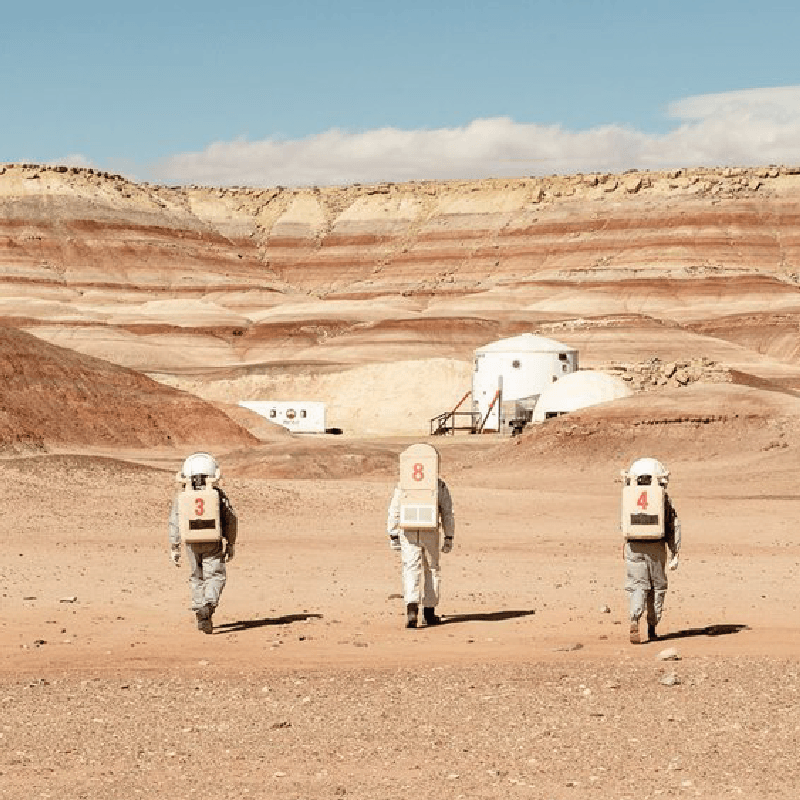
Aerial drone technology has considerably evolved in the past years, thanks to the increasing number of potential applications. Hardware miniaturization and deep-learning algorithms brought this technology to a fundamental role in high-risk scenarios. Mars, due to its geological and atmospheric properties, represents a totally new ground to expand the boundaries of this technology. Aerial drones can become a fundamental subsystem of human activities on Mars: logistics, safety inspections, search and rescue missions, and multispectral analysis can be safely left to swarms of autonomous flying drones.
The DOME project research background is focused on:
X-5 VTOL MAPPING DRONE
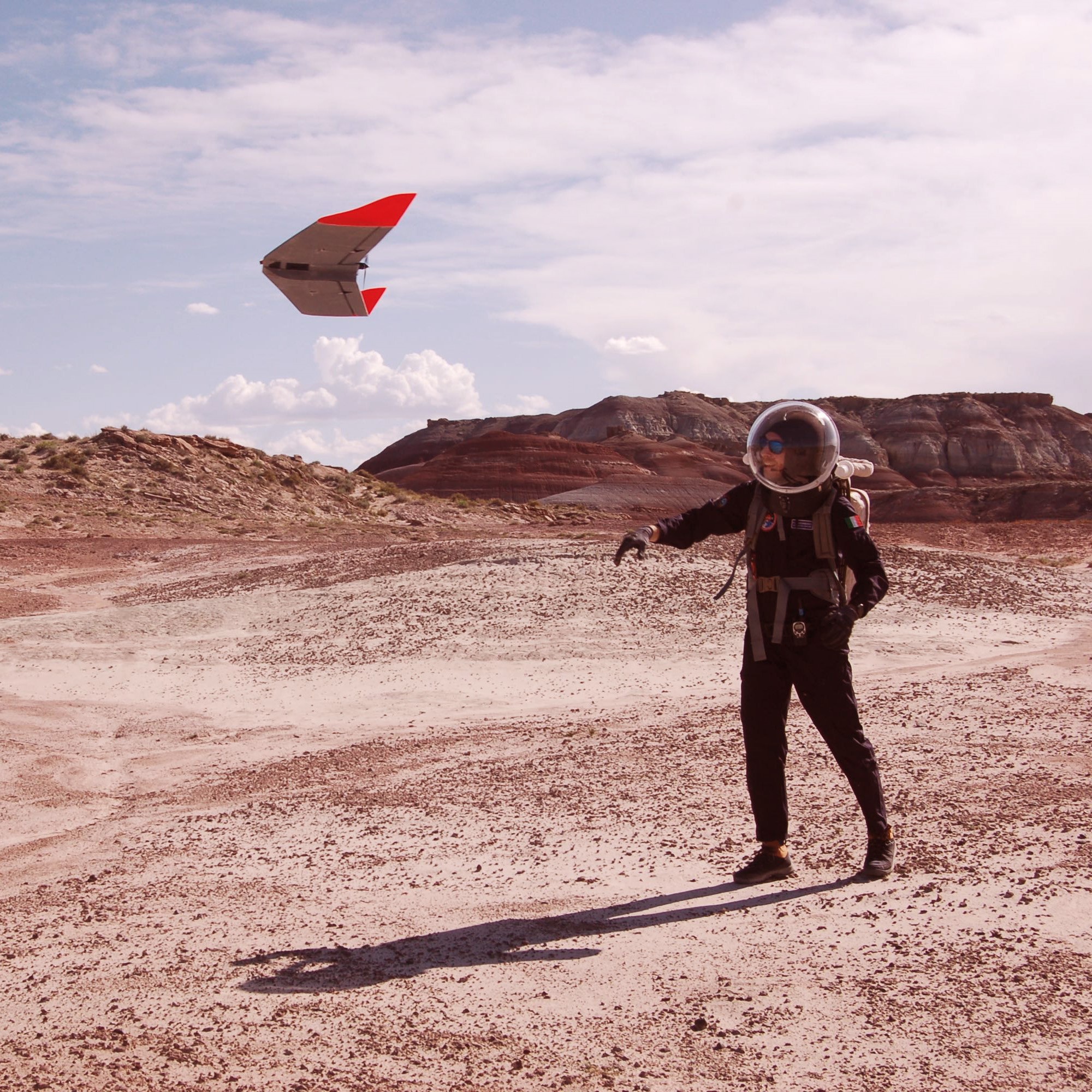
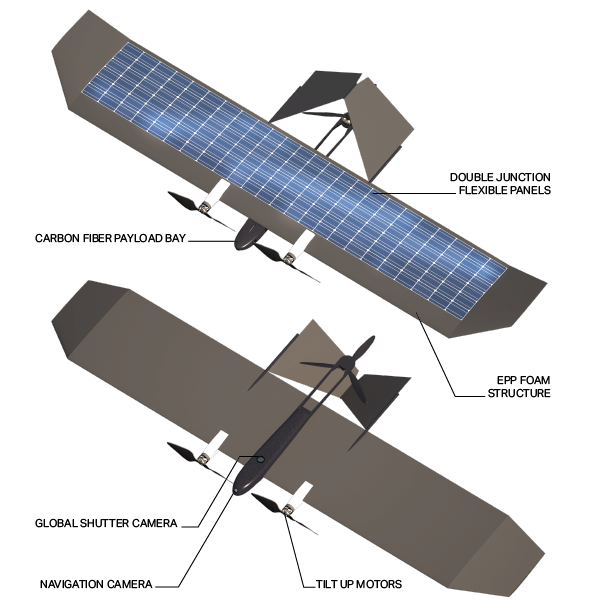
The X-5 Drone is an experimental concept for an autonomous aerial platform designed to complement the first human crews on the Martian surface. The main objective of X5 is to demonstrate the reliability and the capabilities of an autonomous solar aerial drone platform for surface surveys on Mars, by performing test demonstrations in analog sites on Earth. Thanks to its VTOL and automatic flying capabilities, the vehicle can autonomously achieve the mission objectives, performing take-off, hovering and landing maneuvers without the need for direct control from the crew. In one of its versions, the X5 can be powered by lightweight double-junction solar arrays, that can potentially assure a dawn-sunset flight autonomy.
The X5 payload is composed of two cameras (one fixed global-shutter camera and one for navigation) and a range of sensors, with the capability to host more mission-specific payloads.
The main operational scenarios covered by the X-5 are:
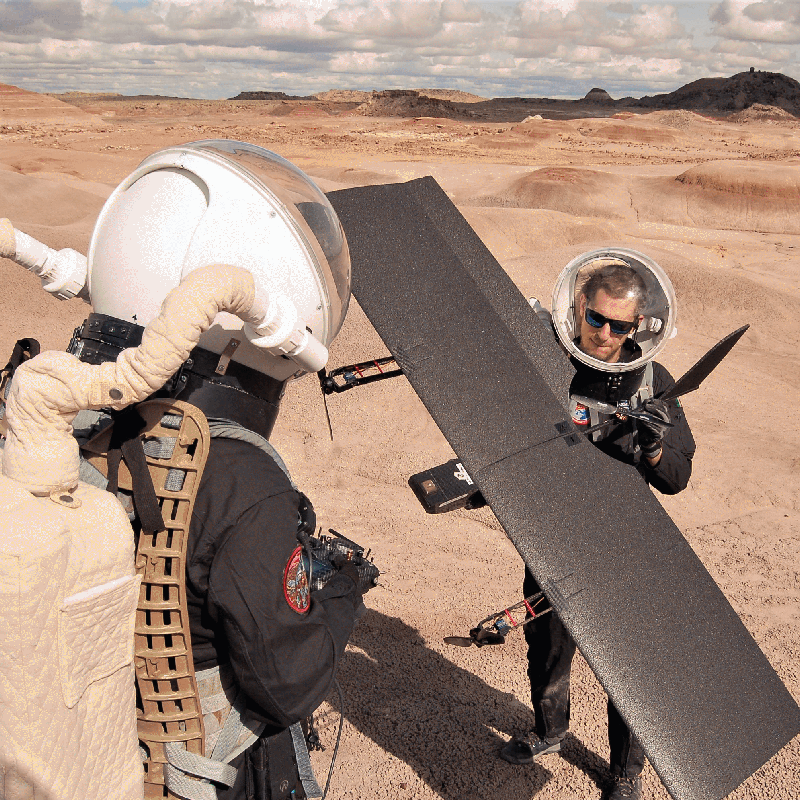
The X-5 Drone has been tested by Crew 212 during the LATAM III analog mission at the Mars Desert Research Station (MDRS) in Utah, USA. The X5 MkII, with improved flight capabilities, will be tested during the AMADEE-20 analog mission that will take place in October 2020.
VESTA
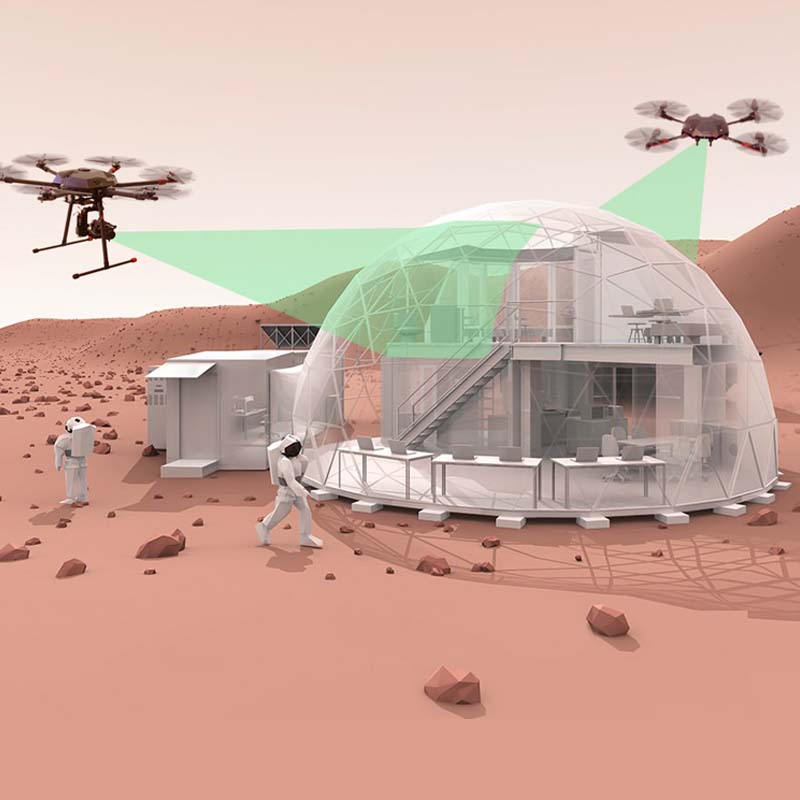
The research project VESTA aims at evaluating possible uses for drones in a human settlement. Operational complexity and utility for the crew are analysed, with regard to safety, crew time and training. A multicopter is used during Extravehicular Activities (EVA) and piloting of the vehicle from inside the station is evaluated. Because of the current absence of a global positioning system on Mars, possible alternative navigation technologies are considered. Due to potential safety issues, flight operations are performed using Earth GPS; further studies are therefore required to investigate autonomous navigation on Mars.
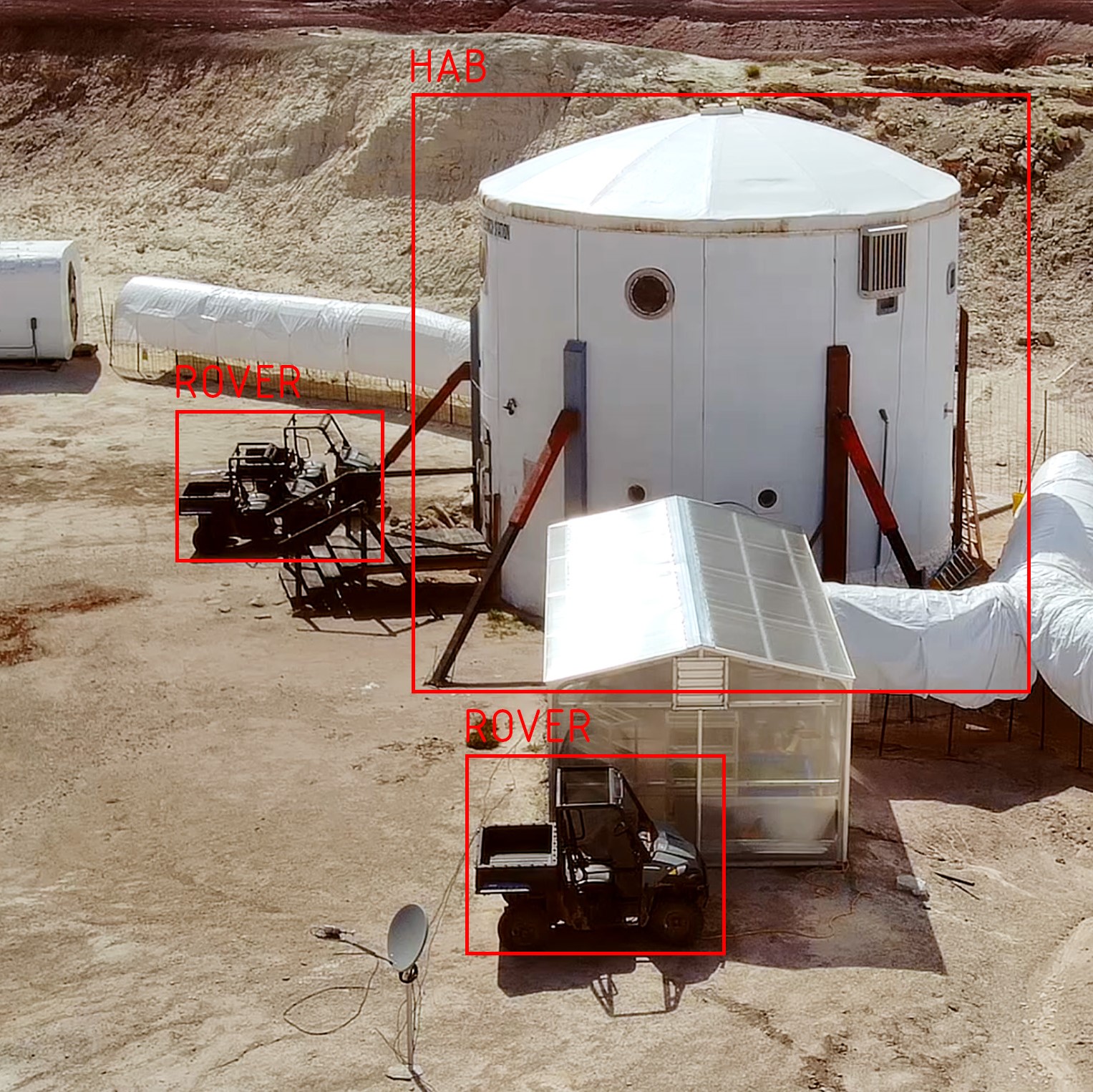
Two different scenarios are evaluated: environment monitoring and settlement inspection. In the first, the drone flies at high altitude to acquire a general understanding of the outside environment, and as a possible warning weathercast system for sandstorms. For inspection missions, the flying drone points its cameras and sensors at the station and navigates autonomously to specific points of interest selected in the MDRS facility. This allows the crew to inspect the external elements, and the use of object recognition algorithms reduces the necessary crew time and increases automation levels of inspection operations.
Preliminary results of this research project were presented at the 70th International Astronautical Congress in Washington D.C. in October 2019.
COMPUTER VISION
Neural networks and AI are an emerging field in the drone industry. Object recognition and tracking Algorithms are fundamental for real-time applications on Mars, since the huge communication delay. To efficiently fly on the martian surface we`ll require navigation software capable of detecting obstacles and updating the UAV route in real-time. Also, the same algorithms can be used to meet specific mission requirements such as outpost inspections, geological surveys and Search and Rescue operations. Without GPS the data coming from the onboard cameras are an important feature to achieve situational awareness and position.
DOME effort on computer vision development is focused on three main areas:
The developed algorithms are implemented inside the drones onboard computers and are going through extensive field testing to ensure their reliability. The collaboration with the Mars Planet Association is a key factor of this research.
MARTIAN FLIGHT
The atmospheric pressure and density on Mars are less than 1% of the terrestrial values. What does that mean, in terms of flight dynamics? DOME is investigating the consequences that specific flight geometry choices will have on the next generation of Mars UAVs. Different architectures will be evaluated, from traditional wing profiles to lighter-than-air vehicles. The objective of this research is to classify the different approaches to artian flight and to find the best design criteria to be implemented in our drones.
Mars helicopter, developed by NASA Jet Propulsion Laboratory, will be the first experiment on martian flight conducted on the planet’s surface and it will serve as the main enabler to the use of UAVs to explore the martian surface. Lightweight materials, high-efficiency motors and power sources are the core features of this research, that make use of advanced composites and batteries as well as in-development technologies.
The martian flight research is conducted in collaboration with AIAA University of Houston.